Fifty Units Before Fifty Thousand: Reading the Sample Run Like a Supplier's Open Book
American procurement culture tends to treat the sample run as a gate: pass it, move on. Units arrive, someone checks them against the drawing, a purchase order for volume follows. It's a checkpoint, not a conversation.
Japanese suppliers, particularly the mid-sized workshops that dominate precision manufacturing, see the same fifty units very differently. To them, the sample run is a thesis statement — a documented argument for why the next fifty thousand units will hold up. The difference in perspective is not sentimental. It's structural, and it shows up in the paperwork, the machine time, and the questions your supplier asks before a single chip is cut.
The Run Nobody Prices Like a Sample
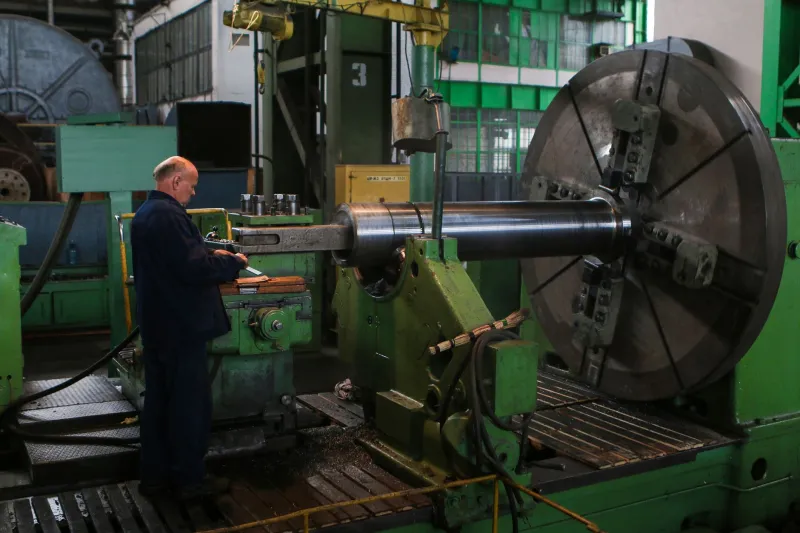
Ask a Japanese supplier for a quote on fifty units and you may notice something odd: the per-unit price is often higher than the volume quote, but not by the multiples you'd expect. That's because the sample run is frequently produced on the same equipment, with the same fixtures and the same inspection protocols, intended for the volume order.
This is deliberate. A sample made on a different machine, or with improvised tooling, tells you nothing about mass production. A sample made under production conditions tells you nearly everything. When a supplier invests real fixture work into fifty units, they are signaling how they intend to hold your tolerances at fifty thousand — and how much they're willing to spend up front to prove it.
What the Documentation Actually Shows
The inspection report that accompanies a Japanese sample run is rarely a one-page certificate. Expect dimensional data on every measured feature, not just the critical ones: actual measured values, measurement equipment identified by make and model, ambient temperature during inspection, and often the operator's initials.
For US buyers accustomed to a passing grade and a signature, the volume of data can feel excessive. It isn't. It's a baseline. When those first units drift six months into production, you'll want to know whether the drift started at unit one or unit thirty-five thousand. The sample report answers that question. Suppliers who document heavily at the pilot stage are suppliers who intend to be held to a standard — and who expect the relationship to last long enough for the documentation to matter.
The Questions Before the Machines Start
Perhaps the most underrated signal in the sample phase is the quality of the questions your supplier asks. A shop that simply confirms the drawing and starts cutting is executing an order. A shop that asks why a surface finish callout is tighter than the mating part requires, or whether a chamfer can be opened up without affecting assembly, is engineering a product.
These questions sometimes read as friction, especially over email across a twelve-hour time difference. They are the opposite. A supplier challenging a spec at the sample stage is a supplier who plans to be accountable for it later. Silence at this phase, not disagreement, is the warning sign.
Three Things to Watch in the First Units
Treat the arrival of your samples as an audit, not a delivery. Three observations carry disproportionate weight:
Consistency within the batch. Fifty units measured against each other reveal process capability in a way a single golden sample never can. Look at the spread, not just the average.
The edge cases. Check the features nobody specified carefully — deburring, packaging, identification marking. A shop that laser-etches lot numbers on fifty sample units is a shop with traceability built into its habits.
The timeline. Note whether the sample arrived on the promised date without being asked about. Sample-run punctuality is the most honest preview of how production delays will be communicated — or not.
A Preview, Not a Formality
The stakes of the sample run are simple: it is the only phase of the relationship where the supplier is performing at full effort with nothing yet committed. Volume orders come with the inertia of schedules and margins. The sample run is discretionary effort, on display.
Read it that way. The next fifty thousand units are already described — in the fixtures, the reports, and the questions — inside those first fifty.