The Expensive Truth About the Lowest Bid: Five Costs Your Quote Never Shows
Every procurement professional has seen the spreadsheet: three quotes for the same component, and one comes in 30% below the rest. The temptation is obvious. The quarterly numbers improve, the sourcing memo writes itself, and everyone moves on.
Then, eight months later, the line stops.
As US manufacturers double down on reshoring and supply chain resilience — a conversation that has moved from the ops floor to the boardroom — the real lesson of the past few years is this: the cheapest quote is often the most expensive decision a company makes. Here are the five costs that never appear on a quotation, and why precision-focused manufacturing partners, particularly those shaped by Japanese quality traditions, are engineered to eliminate them.
1. The Rework Spiral
Low-cost manufacturing frequently trades inspection rigor for margin. Parts arrive within a loose interpretation of spec, and your team discovers the drift during assembly — or worse, in the field.
Rework is not just the labor to fix parts. It's expedited freight, re-inspection, schedule reshuffling, and the engineering hours spent diagnosing someone else's process. Studies of quality costs have long shown that the cost of fixing a defect multiplies at every stage it travels downstream.
The precision alternative: Partners built on kaizen methodology treat defects as process failures to be engineered out, not sorted out. Statistical process control, in-line gauging, and empowered line operators who can stop production mean conforming parts arrive the first time — and the rework line stays dark.
2. Unplanned Downtime
A failed component doesn't just fail itself; it fails everything waiting on it. For a mid-sized US manufacturer, an hour of unplanned line downtime can run into five figures. A week of it can erase a quarter's margin.
Cheap suppliers create downtime in two ways: inconsistent quality that triggers stoppages, and unreliable delivery that leaves lines starved for material.
The precision alternative: Japanese industrial suppliers' just-in-time heritage means schedule reliability is a discipline, not an aspiration. On-time delivery rates above 99% are the norm among mature Japanese partners — because their own production systems were designed around the assumption that someone downstream depends on them, completely, every day.
3. Intellectual Property Leakage
Send your drawings to a low-cost supplier without deep IP protections, and you may soon meet your own product competing against you — sometimes in your own market.
The precision alternative: Japan maintains one of the world's strongest IP enforcement regimes, and Japanese firms operate under business norms that treat customer designs as inviolate. The supplier relationships in Japanese manufacturing are frequently decades long — a structure in which betraying a customer's trust would end a company's entire export business. For US firms protecting proprietary designs, that legal and cultural framework is a genuine asset.
4. Compliance Failures and Regulatory Exposure
A component that can't be certified — whether it fails material traceability, RoHS/REACH requirements, or industry-specific standards like AS9100 for aerospace — isn't a bargain. It's a liability with your company's name on it.
Worse, compliance failures discovered late can trigger recalls, customs seizures, and in regulated industries, scrutiny that follows your company for years.
The precision alternative: Quality-certified Japanese manufacturers build full material traceability and documented process control into their standard operating model, because their domestic customers — automotive OEMs, medical device makers — demand nothing less. Certification is not a marketing badge; it is the operating system.
5. Brand Damage: The Cost That Compounds
This is the cost no spreadsheet captures. A defective product that reaches customers doesn't just generate warranty claims — it generates reviews, returns, lost contracts, and a question mark that follows your brand into every future sale. Rebuilding consumer or B2B trust costs multiples of what proactive quality would have cost.
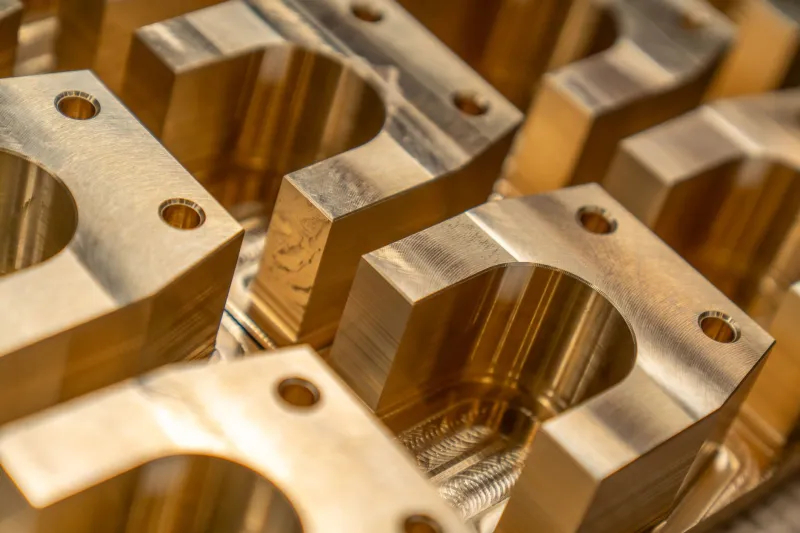
The precision alternative: The Japanese tradition of monozukuri — craftsmanship pride in making things — means the people machining your parts see your brand's reputation as entangled with their own. It is a cultural safeguard no inspection protocol can fully replicate.
The Reshoring Math
The current push to rebuild resilient American supply chains is, at its core, a recognition that unit price was never the whole story. Reshoring solves proximity and geopolitical exposure. But for components where precision, IP protection, and reliability are non-negotiable, a complementary strategy — partnering with precision-focused Japanese manufacturers — delivers much of the resilience reshoring seeks, with quality credentials few low-cost regions can match.
The lowest quote will always look attractive on the day it arrives. The five costs above are how it looks a year later. Choose the partner whose quote already includes the things that keep those costs at zero.