Beyond the Brochure: What Japanese Tolerance Standards Actually Mean for Your Bottom Line
When a US-based aerospace supplier began auditing its component failures last year, engineers traced a troubling pattern back to a single decision: sourcing precision-machined fittings from the lowest-cost bidder overseas. The parts met spec on paper. In practice, dimensional drift across production lots created assembly-line delays that cost more than the original quote saved many times over.
Stories like this explain why a growing number of American manufacturers are taking a harder look at Japan — a country whose industrial reputation was built not on price, but on something harder to quantify and far more valuable to protect.
The Philosophy Behind the Numbers
Two concepts anchor Japanese manufacturing culture, and both translate directly into procurement outcomes.
Monozukuri — often translated as "the art of making things" — describes a craftsman's mindset applied at industrial scale. It treats the production of a component as an act of pride, not merely a transaction. In practice, this means operators are empowered to halt a production line when something looks wrong, even if the defect would have passed downstream inspection.
Kaizen, or continuous improvement, embeds incremental refinement into daily operations. A machining parameter adjusted by two microns today becomes the new standard tomorrow. Over years, these micro-improvements compound into capabilities competitors struggle to replicate.
Neither concept appears on a quotation sheet. Both show up in the defect data.
Tolerance and Defect Rates: A Practical Comparison
Consider typical outcomes for high-precision CNC-machined components across major sourcing regions:
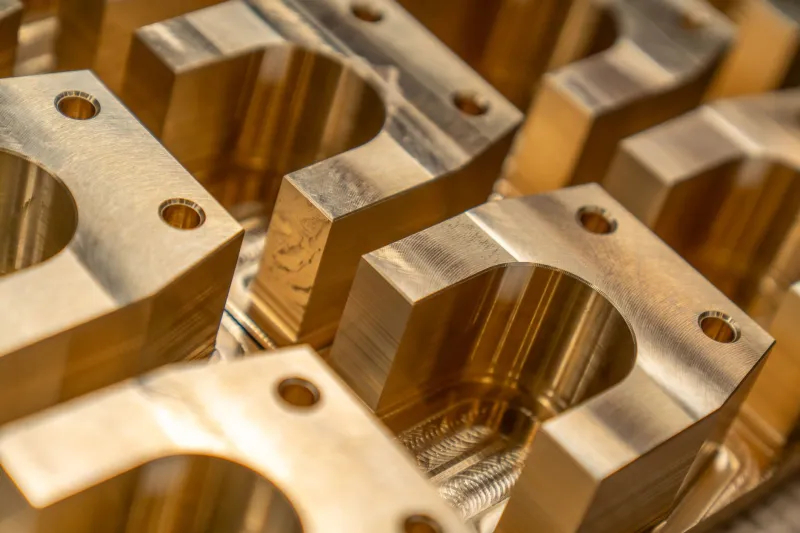
- Tolerance capability: Japanese precision shops routinely hold tolerances of ±0.005 mm on production runs, with some specializing in sub-micron work for optics and medical devices. While capable shops exist everywhere, the consistency of holding tight tolerances across a 50,000-unit run — not just the first article — is where Japanese suppliers differentiate.
- Defect rates: Japanese quality systems built around the "zero defects" tradition frequently report defect rates measured in parts per million (PPM). Many US automotive suppliers working with Japanese partners see sustained PPM figures below 10, versus figures 10 to 100 times higher from less mature supply bases.
- Schedule reliability: Japanese suppliers' on-time delivery rates commonly exceed 99%, a function of decades-old just-in-time discipline rather than aggressive scheduling.
For a US buyer, these differences are not abstract. A single rejected lot can idle a line for days. A supplier who ships 99.999% conforming parts lets your team spend its time on growth instead of inspection.
Supply Chain Stability as a Feature, Not a Bonus
The disruptions of the past several years taught American companies an expensive lesson: the cheapest supply chain is worthless if it breaks. Japan offers structural advantages here.
- Financial durability: Japanese industrial firms typically carry conservative balance sheets, reducing the risk of a partner collapsing mid-contract.
- Workforce continuity: Lifelong employment traditions in skilled machining trades mean institutional knowledge stays put. The machinist who understands your part's quirks will likely still be there in a decade.
- Transparency norms: Japanese business culture emphasizes long-term relationships (shinrai, or trust-based partnership), which tends to produce more honest capacity reporting and earlier warning when problems arise.
How to Vet an Overseas Manufacturing Partner
Enthusiasm for Japanese quality should not replace due diligence. A disciplined vetting process includes:
- Verify certifications beyond the certificate. ISO 9001 is table stakes. For regulated industries, look for IATF 16949 (automotive), AS9100 (aerospace), or ISO 13485 (medical). Then ask for audit summaries, not just logos.
- Request process capability data. Ask for Cpk values on dimensions similar to yours. A supplier who can produce Cpk ≥ 1.67 on comparable work has demonstrated statistical control, not just luck.
- Conduct a virtual or on-site audit. Walk the floor — even by video. Look for 5S organization, documented work instructions at the point of use, and employees who can explain their own quality checks.
- Start with a paid pilot run. A small production batch under real conditions reveals more than any sample part. Budget for it; it's the cheapest insurance available.
- Check references in your own industry. Ask existing US customers about communication responsiveness, escalation handling, and how the supplier behaved when something went wrong — because something eventually does.
The Case, Stated Plainly
Japanese precision manufacturing rarely wins on unit price. It wins on total cost: fewer rejects, fewer line stoppages, fewer warranty claims, and a supply relationship measured in decades rather than quarters. For American companies rebuilding resilient, high-integrity supply chains, that arithmetic increasingly speaks for itself.