Discipline You Can't Put on a Quote: Inside the Morning Rituals Behind Japanese Tolerances

Photo: Ethan Doyle White, CC BY-SA 4.0, via Wikimedia Commons
On a visit to a machining workshop in Kanagawa Prefecture, an American buyer once asked his host why a small Shinto shrine stood beside the CNC line. The answer was not what he expected. The shop foreman did not talk about religion. He talked about the first thirty minutes of every shift — how the same sequence of cleaning, checking, and acknowledging happened whether the shop was rushing a prototype or running steady production. The shrine, he explained, was simply the most visible piece of a routine that never changed.
For US buyers evaluating Japanese suppliers, this is the point worth sitting with: the rituals look like tradition, but they function like quality-control psychology. You are not looking at decoration. You are looking at the mechanism that makes the tolerances on the inspection certificate repeatable.
Why Routine Is a Manufacturing Asset
American manufacturing culture tends to prize flexibility — line changeovers, dynamic scheduling, lean staffing that flexes with demand. Flexibility has real advantages, but it has a cost: variability. Every time a process is re-invented on the fly, a new opportunity for error is introduced.
The Japanese workshops that consistently hold ±0.005 mm across a year of production do not achieve it through more talented hands alone. They achieve it through the radical standardization of how each day begins. Machines are wiped down in the same order. First-piece checks follow the same sequence. The same person, or a person following the same script, confirms the same items before any chip flies.
Psychologists call this reducing cognitive load; manufacturers call it process discipline. Either way, the effect is identical. When the opening thirty minutes never change, any deviation later in the day stands out immediately. Ritual makes the abnormal visible.
Two Workshops, Two Versions of the Same Habit
Consider two composite profiles drawn from the kinds of Kanagawa suppliers Goto Industry regularly works alongside.
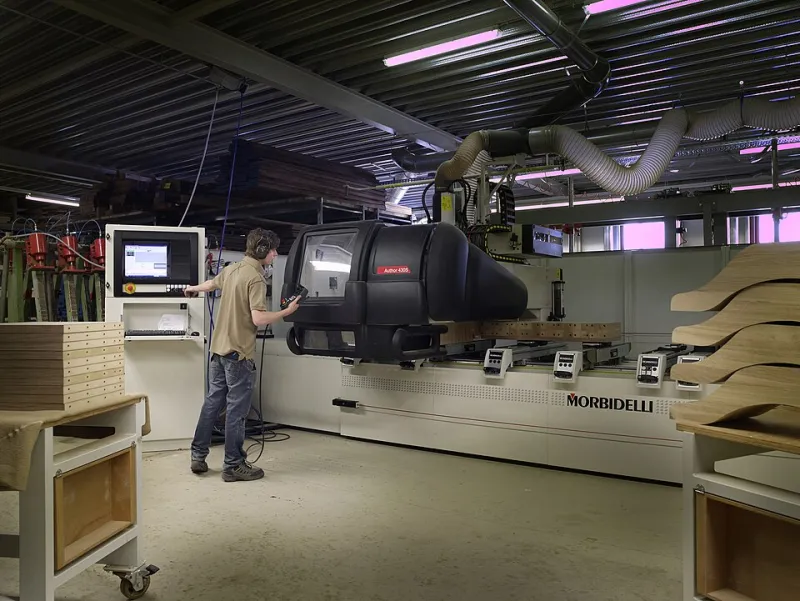
The first is a twelve-person precision turning shop serving automotive and medical customers. Every morning at 8:15, the entire team stops. The shop floor is swept, each machine's coolant and lubrication levels are confirmed against a laminated card, and the day's first article is measured by the technician who will run the job — not by a separate inspector. The owner describes the routine as the shop "agreeing on what normal looks like" before production begins. His scrap rate has sat below half a percent for years. He credits the ritual, not the machines, which are older than many of his employees.
The second is a mid-sized milling operation with seasonal ceremonies on its calendar — a formal safety observance each January and a quieter year-end cleaning known as ōsōji, when every machine is stripped, inspected, and reassembled. To an outsider these look like holidays. In practice, the year-end teardown doubles as a full preventive-maintenance audit. The shop enters January knowing every spindle, way, and fixture is within specification — a baseline most Western shops pay third parties to establish, if they establish one at all.
Neither owner would frame this as psychology. They would call it keigo — care and respect for the work. But the translation for a US procurement team is straightforward: this is a supplier whose variability is engineered down to the level of daily habit.
What to Look For Before You Sign
You do not need to fly fourteen hours to read these signals, though a floor visit pays for itself. You can start with what is already in front of you.
Ask how their day starts. A supplier who can describe their morning routine in specific, unvarying detail — who does what, in what order, checked against what standard — is a supplier who has thought about repeatability at the level of minutes, not just microns. Vagueness here is a data point.
Look for the calendar. Seasonal inspections, year-end deep cleans, quarterly safety observances. These are built-in checkpoints that reset the baseline. A shop without them is drifting between maintenance events, and drift is what kills tight tolerances over a long production run.
Notice who performs the checks. Rituals that involve the operators themselves — first-piece measurement, cleaning, machine confirmation — build ownership of quality at the point of production. Rituals performed only by a separate QC department tell you quality is a gate, not a habit.
Read the consistency of the paperwork. Daily check sheets that show the same handwriting, the same fields, the same rhythm day after day are the documentary shadow of a real routine. Gaps and irregularities in the paperwork usually mean gaps in the habit.
The Takeaway for US Buyers
None of this means you should require a supplier to install a shrine. It means that when you encounter one — or a morning meeting, a seasonal teardown, a routine that never bends — you should read it as evidence, not folklore.
The tolerances on a certificate are an output. Rituals are the input that makes the output dependable at order fifty thousand as well as order five. When you are choosing between two quotes that look identical on paper, the supplier whose days begin the same disciplined way, every day, is telling you something no line item will.
Tradition, in this context, is just quality assurance that has been running long enough to become culture. Buyers who learn to see it that way tend to sign better contracts.