Reading the Second Quote: What Japanese Pricing Tells You About Year Two
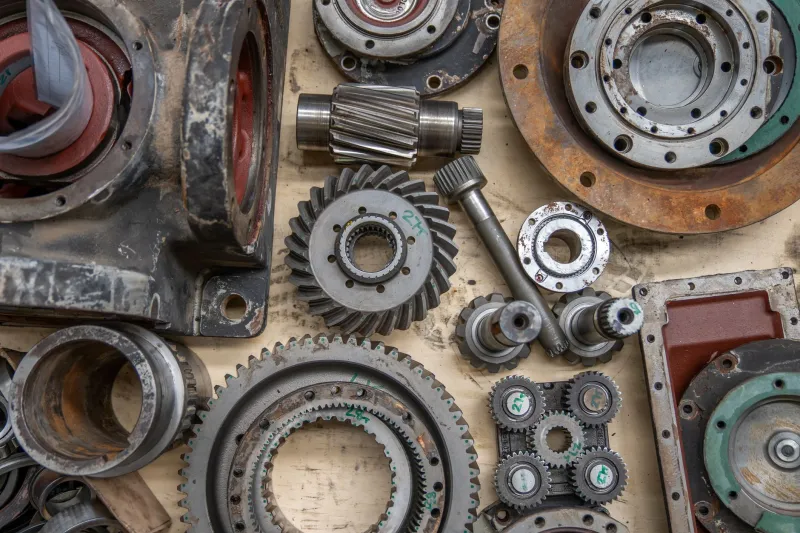
Ask three suppliers for a quote on the same CNC-machined bracket and you will almost always see the same pattern: the Japanese workshop's number lands somewhere in the middle or near the top. The Ohio job shop undercuts it. The offshore option undercuts everyone. On a spreadsheet, the decision looks obvious.
It is not. The problem is that a first quote answers the wrong question. It prices the order in front of you. What it cannot show is what each supplier will charge you for the next two years of that same part — and that is where Japanese quoting conventions quietly diverge from most of the market.
Why the First Number Looks High
Japanese workshops tend to build their initial quotations from the assumption that you will order again. That assumption changes the math in ways that are easy to miss. Rather than spreading the full cost of fixturing, first-article inspection, and process documentation across a single purchase order, they amortize those setup costs across the relationship they expect to have.
The result is a quote that includes line items many US buyers have never seen itemized: projected tooling replacement at cycle counts, a quality reserve tied to expected scrap rates, and in some cases an explicit note that unit pricing will drop at defined volume thresholds. A quote from a Kanagawa or Nagano supplier may come back with a footnote reading, in effect, "unit price at 10,000 cumulative units: X." American RFQ templates rarely have a box for that.
The higher first number, in other words, is often a more honest number. It reflects what the supplier actually believes the part will cost to make well — not the price needed to win the PO and recover margins later.
The Costs Hiding in the Low Bid
Consider what happens after the first order ships. The low bidder discovers that the tolerances are tighter than their process comfortably holds. Scrap runs at 4% instead of the 1% they quoted. Tools wear faster on the specified alloy. Every corrective action becomes a change order, an expedite fee, or a quiet concession absorbed into the next quote — which suddenly is not so low anymore.
None of this is unique to offshore suppliers; it happens with domestic vendors too. But it happens fastest when a supplier priced the job to win rather than to run. Japanese workshops, shaped by decades of serving domestic customers who audit everything and switch rarely, generally refuse to play that game. A quote that seems 12% higher on day one may reflect a scrap rate assumption of 0.8% instead of 3%, and a tooling budget based on actual measured tool life rather than catalog estimates.
A Simple Exercise: Quote the Same Part Twice
Here is a practical way to test this without waiting two years. Go back to your shortlisted suppliers and request a hypothetical second-order quote: same part, same volumes, but framed as a repeat order following a successful first run. Ask for unit pricing at 5,000, 20,000, and 50,000 cumulative units.
What you are looking for:
- The size of the drop. A supplier confident in their process will show meaningful unit-price reduction on repeat orders, because setup and learning-curve costs genuinely disappear. A supplier who priced the first job aggressively often shows almost no drop — the margin was never there to give back.
- The stability of assumptions. Compare scrap rates, tooling allowances, and lead times between quote one and quote two. Consistency signals a shop that knows its own process capability.
- What appears in writing. Japanese suppliers will frequently document quality reserves, inspection frequency, and tooling schedules unprompted. If a supplier cannot tell you what their rework rate costs, they may not be tracking it.
Then run the two-year arithmetic. Take each supplier's first-order and second-order pricing, project your realistic annual volume, and add a conservative allowance for quality events — even a modest one for the proven performer, a heavier one for the unproven low bid. In most bracket, housing, and precision-component categories we see, the workshop with the higher first quote lands 8–15% cheaper by month twenty-four.
What This Means for Your RFQ Process
None of this means US buyers should simply accept the highest number. It means the RFQ itself should be designed to reveal pricing behavior, not just pricing. Ask for tiered pricing across cumulative volumes. Require scrap-rate and rework-rate assumptions in writing. Ask how tooling costs are amortized and what happens at replacement. And weight past-performance data — on-time delivery, first-pass yield, corrective-action closure — into the score, because that is the data the second quote is really priced from.
The Japanese approach to quotation reflects a deeper habit: pricing as a forecast of a relationship, not a bid on a transaction. US procurement teams who learn to read that forecast — to ask for the second quote before the first order ships — consistently end up with suppliers who cost less, deliver more predictably, and answer the phone when something goes wrong.
The cheapest first quote and the lowest two-year cost are rarely the same number. The second quote is how you find out which one you are actually buying.