When Fifty People Beat Fifty Thousand: The Case for Japan's Mid-Sized Workshops
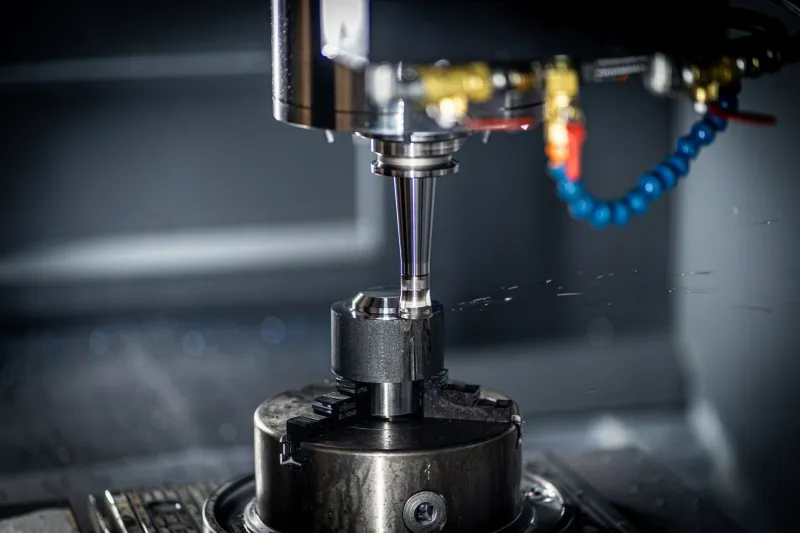
There is a reflex in American procurement that deserves to be challenged: the assumption that a larger supplier is a safer supplier. It is an understandable instinct. Big contract manufacturers have redundancy, capacity, and name recognition that reassure risk committees. But after years of watching sourcing outcomes across both models, we would argue the opposite for a specific and important class of work — high-precision components where quality failures are catastrophic and volumes are moderate.
For that work, Japan's mid-sized workshops routinely outperform the giants. And the reasons why say something important about how manufacturing value is actually created.
The Accountability Advantage
Walk into a 150-person machining shop in Nagano or Niigata and you will often find the second-generation owner on the floor, not in a boardroom. When something goes wrong with your order, the person accountable is someone whose name is on the building. That is not sentimentality; it is an incentive structure. In a 50,000-employee contract manufacturer, your part is line item 4,217 in a quarterly portfolio. In a family workshop, it may be the reason the company was founded.
This shows up in measurable ways: faster escalation when a process drifts, engineers who answer emails at unusual hours, and corrective actions that address root causes rather than paperwork.
Monozukuri, Observed on the Floor
The Japanese term monozukuri is usually translated as "craftsmanship" or "the art of making things," which undersells it. On the factory floor, it looks like this:
- A machinist who adjusts a fixture by a few microns because the sound of the cut changed, before any gauge confirmed a problem.
- Inspection records going back decades, kept because the shop treats its process history as an asset, not an archive requirement.
- Apprentices spending their first year on setup and measurement before touching production parts.
None of this appears on a supplier scorecard. All of it appears in your component quality. Large contract manufacturers can buy the same machines; they cannot easily replicate a labor culture where the operator's judgment is treated as part of the process.
Where the Giants Still Win
Honesty requires the counterpoint. For high-volume, cost-driven commodity work, scale wins, and a mid-sized workshop will not beat a global CM on price per unit at a million pieces. Nor should a buyer treat every small supplier as automatically superior — capacity constraints, thin bench depth, and succession risk are real. The mid-sized workshop is not a universal answer. It is a better answer for a particular problem: precision work in the hundreds to low tens of thousands of units, where a single defect can trigger a recall.
Rethinking the Risk Equation
The deeper issue is how American buyers define risk. We tend to measure a supplier's size and financial statements, and call it due diligence. A more useful question is: who specifically will be responsible for my part, and how long have they held that responsibility? In Japan's mid-sized workshops, the answer is often a named engineer with twenty years on the same process. In a giant CM, the honest answer is frequently a rotation chart.
For buyers willing to look past headcount, Japan's workshops of 50 to 200 employees offer something the scale economy cannot manufacture: a workforce where the craft, the company, and the customer's outcome are the same thing. That is not a nostalgia play. It is a competitive advantage, and it is sitting in plain sight for any procurement team willing to visit the genba.