Skip the Account Manager: What Happens When the Machinist Answers Your Email
Somewhere in the American corporate imagination lives a specific expectation about what supplier service looks like: a named account manager, a toll-free number, a ticketing portal with a 24-hour response SLA, and an escalation path with at least three rungs. We have built entire procurement philosophies around this architecture. When a Japanese workshop fails to provide it — when the response to a technical question arrives, hours later, from the person who actually programmed the machine — some buyers read it as a gap in professionalism.
It is worth arguing the opposite. That email from the machinist may be the most valuable customer service you will ever receive.
The Craftsman as the Point of Contact
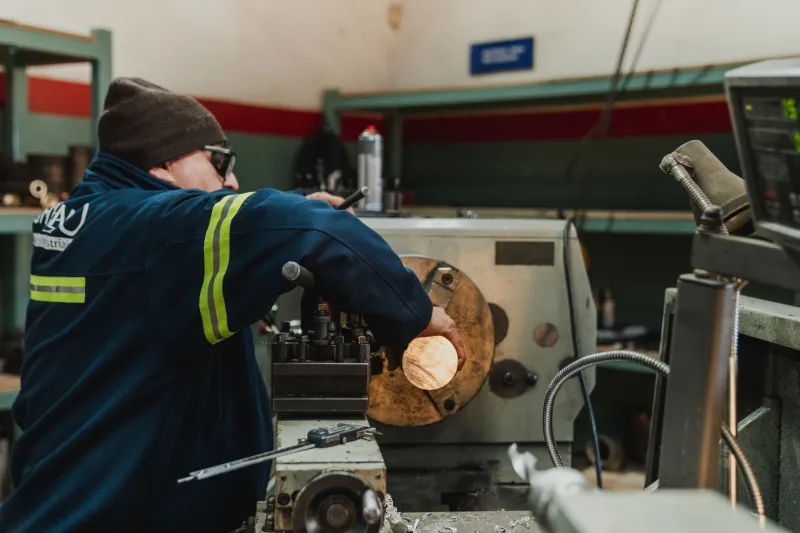
In many of Japan's small and mid-sized manufacturing workshops, the person who owns your job — who selected the tooling, set the feeds and speeds, and inspected the first article — is the same person who answers your technical email. There is no handoff, no translation layer, no account manager relaying your question to an engineer and paraphrasing the answer back. The question goes to the source, and the answer comes from it.
This is not an accident of disorganization. It reflects a deeply held view of manufacturing as a craft discipline, where responsibility for a part belongs to the person who made it, from quote to shipment. The Japanese term takumi — master craftsman — carries connotations of ownership that American job descriptions rarely capture. In these shops, customer communication is not a department. It is part of the work.
Why the American Model Breaks Down at the Technical Edge
The account manager model optimizes for relationship management and response speed. What it does not optimize for is problem-solving depth. Consider the typical failure scenario in US-based sourcing: a tolerance issue surfaces on a machined component. The buyer emails the account manager, who opens a ticket, which routes to an applications engineer, who asks the question back through the account manager — each hop a chance for nuance to be lost. Two days later, the buyer receives an answer that may or may not reflect what the shop floor actually knows.
In the craftsman-led model, the same question reaches the person who cut the part before lunch. The reply that arrives may be shorter, blunter, and written in imperfect English — and it may contain information no intermediary would have thought to relay: that the tolerance in question sits at the edge of what the material can hold, and that a 0.02mm design change would eliminate the problem entirely.
That last detail matters. Direct engineer access doesn't just shorten cycles; it surfaces design-level solutions that a structured communication chain tends to filter out. Some of the best cost reductions in cross-Pacific sourcing have come not from negotiation but from a five-line email exchange between an American design engineer and a Japanese die-maker.
Learning to Use It Well
Access is only as good as how you use it, and American buyers sometimes squander it. A few adjustments:
- Write to the engineer, not the title. Precise questions with drawings, measurements, and clear failure descriptions get precise answers. Vague "checking in" emails get slow ones.
- Accept the pace. A thoughtful reply from a working machinist may take a day. That is not a service failure; it is the sound of someone checking the answer against the actual part.
- Reciprocate the directness. These relationships run on candor. If a proposed fix doesn't work on your line, say so plainly, with data. Circumlocution is a courtesy neither side needs.
- Don't mistake brevity for coldness. Japanese business writing is economical. A two-sentence reply confirming a fix is a complete and courteous answer, not a brush-off.
A Different Definition of Service
The US model asks: how fast did they respond? The craftsman-led model asks: who actually knows? Neither is wrong, but buyers who insist on importing the first framework into every Japanese relationship will spend their time managing communication instead of using it.
The opportunity sitting in your inbox is this: the person who cut your part will answer your email. Treat that access as the asset it is, and your problem-solving cycles will shrink in ways no SLA can promise.