Six Thousand Miles in a Foam Cradle: What a Crate Reveals Before You Open It

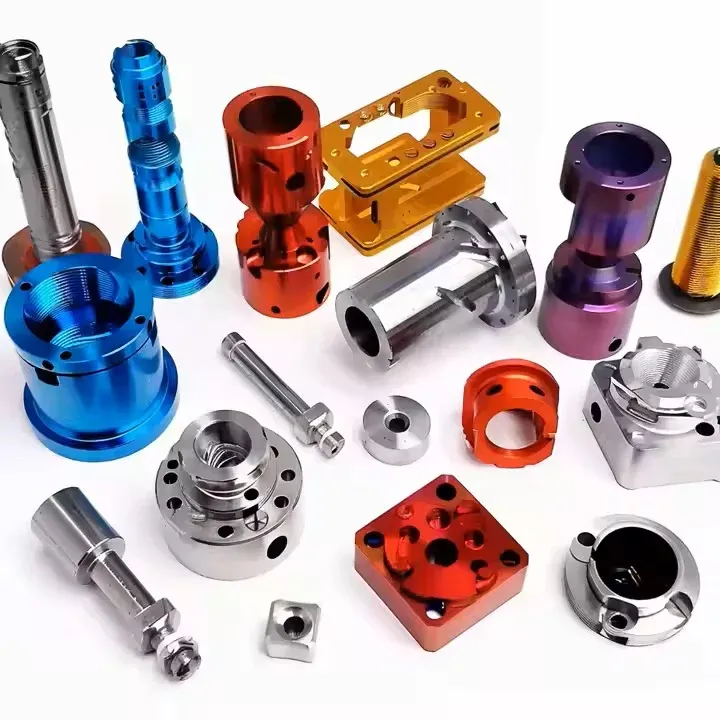
Photo: Leadingtopunion, CC0, via Wikimedia Commons
The Part You Never Inspected
A procurement manager in Ohio once told us the story of a rejected shipment of precision aluminum spacers. The parts had left a Kanagawa workshop certified within two microns of spec. They arrived in Long Beach looking flawless — until the receiving team pried them apart and found fine scoring across the anodized faces, the kind of damage that happens when hard metal rides against hard metal for five weeks at sea. The machining was perfect. The packaging was not. The entire lot went to the scrap review committee.
Stories like this rarely make it into supplier scorecards, because the failure is misattributed. The buyer blames transit, or the freight forwarder, or bad luck. In reality, the last kilometer of tolerance — the journey from the inspection bench to your receiving dock — is a manufacturing process of its own. And it is one that many suppliers treat as an afterthought.
Why the Final Meter Matters as Much as the First
Think about what a precision component endures after final inspection. It is handled by gloved and ungloved hands. It is placed into a carton that will sit in a Yokohama summer warehouse, then a container that may reach 140 degrees Fahrenheit while crossing the Pacific, then a rail car in the American Midwest in February. Humidity swings can be extreme enough to condense moisture directly onto bare machined surfaces. Vibration runs through the load for thousands of miles.
A part that measured perfectly at 4 p.m. on a Friday in Kanagawa can be out of spec by the time it reaches Cincinnati — not because the machine drifted, but because the crate was designed by whoever had time that afternoon.
Japanese workshops with strong quality cultures tend to treat this final stage with the same rigor as the first cut. Cleaning, wrapping, crating, and orienting are not left to the newest employee. They are specified, documented, and audited like any other process step.
Following One Shipment Across the Pacific
Consider a representative case: a shipment of stainless steel sensor housings bound for a contract manufacturer in the Research Triangle region of North Carolina.
Before packing, every housing is ultrasonically cleaned and dried with filtered air. Why? Because a particle left inside a bore can corrode, migrate, or contaminate the buyer's assembly line months later. The cleaning step is logged, just like a dimensional inspection.
Each part is then wrapped in VCI (vapor corrosion inhibitor) paper, which releases compounds that prevent rust on ferrous surfaces without leaving residue. Desiccant packs are placed inside the poly bag, and a humidity indicator card — a small strip that changes color if moisture inside the package crosses a threshold — is included. That card is essentially a flight recorder for the shipping environment. If it arrives blue instead of pink, the supplier knows something about the lane, and so do you.
The housings are not simply poured into a carton. They are seated in custom-cut foam dunnage, each cavity shaped to the part, so nothing can shift, touch, or abrade. Heavier components are oriented with the datum faces protected and marked with labels indicating which side must face up — labels that assume the person opening the box in Durham may not read Japanese, so they use ISO-style pictograms.
Finally, the crate itself is built, not bought. Wood is heat-treated and stamped for ISPM-15 compliance, so US Customs does not hold the shipment over a pallet regulation. The packing list inside mirrors the carton labels, which mirror the invoice. A buyer can reconcile the shipment in minutes instead of hours.
Reading a Supplier Through Their Packing Slips
Here is the editorial argument we would put to any US buyer: you can learn more about a supplier's respect for your product from their packaging specification than from their brochure.
A shop that invests in custom dunnage for a 300-piece order is a shop that assumes you will reorder. A shop that includes humidity indicators is a shop that thinks about your receiving dock, not just its own shipping door. A shop that asks about your assembly line's part presentation — do you want parts oriented for direct drop into a feed bowl? — is a shop thinking about your total cost, not just its quoted unit price.
A Pre-Order Packaging Audit: Eight Questions
Before your first purchase order, ask the prospective supplier:
- What is your standard cleaning process before packing, and is it documented?
- Do you use VCI paper or bags for ferrous parts? What about desiccants for ocean freight?
- Will you include humidity indicator cards, and will you honor a claim based on them?
- Is dunnage custom-cut per part family, or generic void fill?
- How are orientation and handling instructions marked — text, pictograms, or both?
- Is crating wood ISPM-15 compliant and stamped?
- Can parts be packed in assembly-line-friendly orientation or quantity per carton?
- May we see photographs of a recent packed shipment — not a staged sample?
The last question is the most revealing. A confident supplier will send you photos of an actual shipment within a day, because they are proud of what the buyer never sees.
Inspect the Wrapper, Not Just the Gift
US procurement culture rewards inspecting the part. It rarely rewards inspecting the container the part traveled in. But packaging is where a supplier's assumptions about you become physical. When you receive a crate from a Japanese workshop and find every housing cradled in cut foam, every bag sealed with a desiccant and an indicator card, every carton labeled in two languages — you are not looking at extra cost. You are looking at a supplier that understands the tolerance you bought does not end at their loading dock. It ends at yours. Choose partners who engineer all six thousand miles of it.