Forty-Five Days, Start to Finish: Following One American Purchase Order Through a Japanese Factory
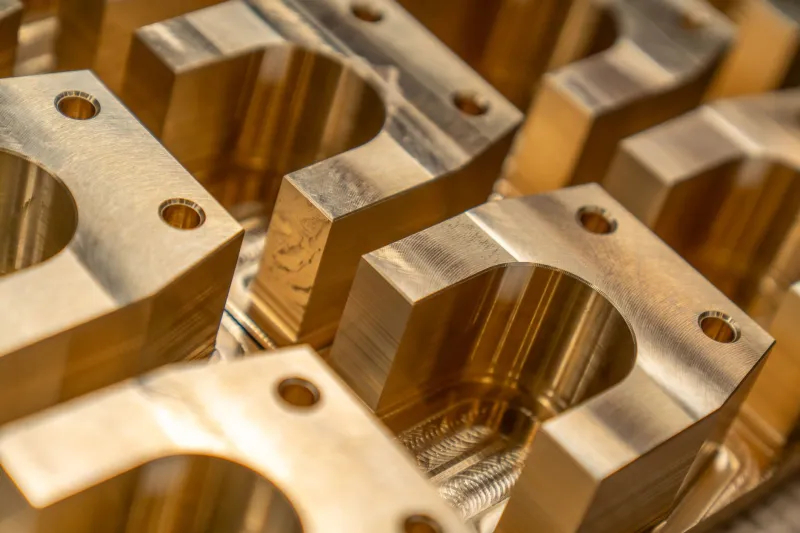
A procurement manager in Dayton signs a purchase order on a Monday for 8,000 machined aluminum housings from a supplier in Gifu Prefecture. The delivery date on that PO reads 45 business days out. To many American buyers, that window looks like a black box — parts vanish into a factory across the Pacific and reappear weeks later, hopefully on schedule.
It doesn't have to be a black box. Here is what those 45 days actually contain, stage by stage, and where delays genuinely happen.
Days 1–5: Order Confirmation and Production Scheduling
The first week is not idle time, even though no metal is being cut. Your PO triggers an internal review on the supplier side: engineering confirms the drawings match what was quoted, purchasing verifies raw material availability, and production control locks a slot into the machining schedule.
This is also when the supplier will flag discrepancies — a tolerance called out on the drawing that differs from the RFQ, a material spec that references an expired JIS revision. Responding to these queries quickly is the single easiest way an American buyer protects their own timeline. A two-day delay answering a clarification email in week one almost always pushes delivery by two days at the end.
Days 5–15: Material Procurement and Tooling
For repeat orders, this phase compresses considerably. For first articles, expect material sourcing and, where required, dedicated fixtures or cutting tools. Japanese mills and material distributors run on their own lead times — typically 7 to 10 business days for standard alloys in stock quantities.
American buyers accustomed to domestic distributors offering next-day material are often surprised here. The lesson: if your part requires a specialty alloy, surface that requirement during quoting, not after the PO is issued.
Days 15–30: Machining, In-Process Inspection, and Quality Gates
Production itself typically occupies two weeks for a mid-volume order. But the defining feature of Japanese precision manufacturing is not the machining — it's the inspection architecture around it.
Expect at least two quality gates: in-process checks during production and a final inspection before packing. For parts with critical dimensions, a first-article inspection report (FAI) or dimensional inspection report is generated at this stage. If your contract requires inspection data, confirm the format early — a supplier producing a full FAI to AS9102 standards will need more time than one producing a standard inspection sheet.
Days 30–38: Export Documentation and Freight Booking
Roughly a week before shipment, the export machinery engages. This includes a commercial invoice, packing list, certificate of origin where applicable, and booking with a freight forwarder. Most established Japanese suppliers handle this routinely for US-bound shipments, but the buyer's own information matters: an accurate EIN, correct consignee details, and clear Incoterms on the PO prevent customs friction on arrival.
The most common delay in this window is not paperwork on the Japanese side — it's a US consignee whose importer information is incomplete or whose customs broker hasn't been designated.
Days 38–45: Ocean Transit, Air Options, and Final Delivery
Ocean freight from Nagoya or Yokohama to Los Angeles or Long Beach runs roughly two weeks port to port — which is why many suppliers quote transit separately from production. A 45-day timeline with ocean freight usually means production finishes around day 30 and the balance is transit plus customs clearance and final-mile delivery.
If your timeline tightens, air freight from Chubu Centrair to a US hub can compress transit to three or four days. It costs more, but for a line-down emergency it's the pressure valve that keeps the relationship intact.
Where Delays Actually Occur — and How to Prevent Them
Across hundreds of shipments, three failure points dominate:
- Slow responses to engineering clarifications in week one. Assign an owner on your side to answer supplier queries within 24 hours.
- Underspecified inspection requirements. State the inspection report format you need at quoting, not at shipping.
- Incomplete import information. Have your customs broker designated and your consignee details verified before the PO is signed.
None of these require specialized knowledge. They require treating the 45-day window as a shared schedule rather than a vendor promise. When both sides manage the timeline actively, Japanese suppliers deliver with a punctuality that American buyers come to rely on — and the black box stops being one.