Fourteen Hours for a Handshake: What US Buyers Actually Learn on a Japanese Shop Floor That No Video Call Can Show
There is a particular kind of meeting that raises eyebrows in any US procurement department: the one that requires a passport. In an era when a supplier can livestream a machining cell from a smartphone in their pocket and AI-assisted audit platforms can flag anomalies in a vendor's quality data from ten thousand miles away, the decision to fly fourteen hours to Japan for a supplier visit looks, on paper, like an expensive habit. It is not. But it is also not always justified — and knowing the difference is becoming a core procurement skill.
What the Camera Never Catches
Ask sourcing managers who have walked a Japanese shop floor what they learned in person, and the answers are rarely about specifications. They are about atmosphere.
One Midwestern buyer described it bluntly: "You can smell a well-run shop." Coolant that is changed on schedule, floors where the 5S markings have actually been repainted rather than just photographed for an audit, tooling stored in custom foam rather than loose drawers — these details compress into a gut-level read on a supplier that no checklist replicates. A webcam shows you a tidy bench. A visit shows you whether tidiness is a policy or a habit.
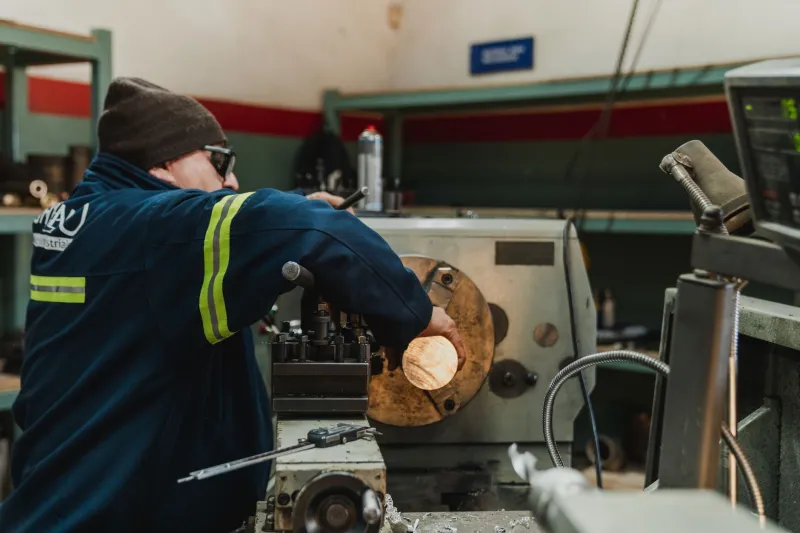
There is also the matter of what happens around the scheduled meeting. On a video call, the supplier controls the frame. On site, you see the parts they did not plan to show you: the rework station and how busy it is, the way a technician handles a forty-year-old lathe — gently, with the familiarity of someone who expects to keep it running another decade — the stack of export crates by the loading dock that tells you who else they ship to.
And then there is time. A video call is an hour, boxed. A shop visit is a day, and much of the real information arrives in the margins: over lunch, walking between buildings, in the pause when an engineer mentions, unprompted, that the plating line is their bottleneck. Japanese business culture runs on what is said indirectly. Subtlety does not survive compression onto a Zoom call. It survives a shared train ride surprisingly well.
The Case Against the Pilgrimage
That said, the trip can be theater, and buyers should be honest about it.
If your relationship with a supplier is transactional — standard components, straightforward tolerances, no co-engineering — a visit rarely changes the outcome. The quality system is either documented and certified, or it is not. Flying around the world to watch a first article inspection you could have watched on a stream is cost without information. Worse, a visit can create a false sense of diligence: the warm glow of a well-hosted tour is not a substitute for reviewing capability indices, on-time delivery data, and references.
There is also the reciprocity problem. A supplier that rolls out an elaborate welcome is, deliberately or not, shaping your judgment. The most experienced buyers we spoke with deliberately scheduled unannounced follow-up visits to second facilities, or asked to return without an agenda, precisely to counter the choreography of the first trip.
When the Airfare Earns Itself
Based on what experienced US sourcing managers told us, the trip pays for itself in three situations.
First, at the start of a strategic relationship. When a component is custom, tolerances are tight, and engineering collaboration will span years, the upfront visit functions as due diligence that cannot be outsourced. You are not just verifying the supplier; you are calibrating how they communicate — which, given the documented cost of spec drift between US buyers and Japanese suppliers, is real risk mitigation.
Second, when something has gone wrong. A quality escape, a missed delivery, a stubborn disagreement over root cause: these are the moments when sitting across a table from the actual machinist who cut the part changes the conversation. Issues that stall for weeks over email often resolve in an afternoon, because presence signals seriousness and unlocks the candor that remote channels suppress.
Third, before a capacity commitment. If you are about to make a supplier a single source for a critical part, walking the floor — counting spindles, watching changeovers, meeting the people who would actually own your program — is the last cheap insurance you will ever buy.
A Practical Rule of Thumb
One veteran of US-Japan sourcing offered a heuristic worth adopting: fly when the cost of being wrong exceeds the cost of the trip by a factor of ten. For a $40,000 annual spend on catalog parts, stay home. For a $2 million program with engineering interdependence, the flight is rounding error.
The return of the in-person visit is not nostalgia, and it is not resistance to technology. It is a recognition that remote tools are excellent at verifying what a supplier knows, and nearly useless at revealing who they are. The best US buyers now run a hybrid: remote audits for the routine, and a deliberate, well-timed trip when the stakes — or the subtleties — demand standing on the floor and paying attention to everything the camera leaves out.