The Hands That Know the Machine Are Leaving: Japan's Machinist Retirement Wave and What It Means for Your 2035 Supply Base
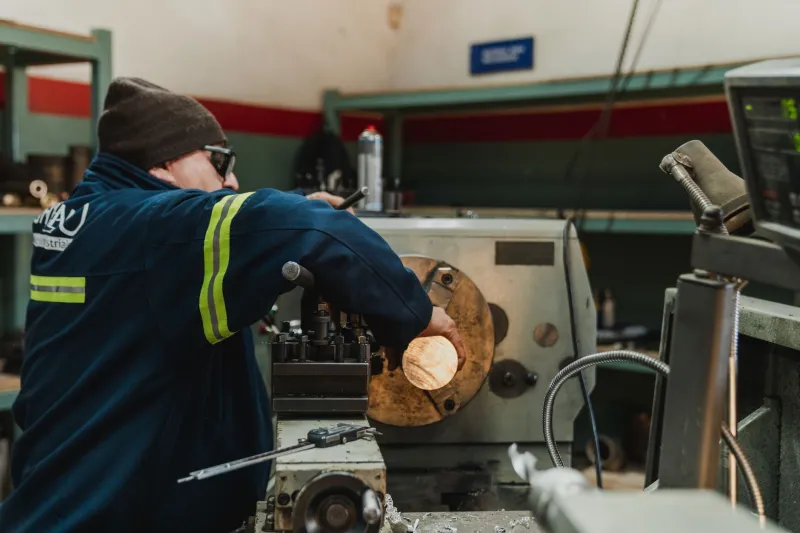
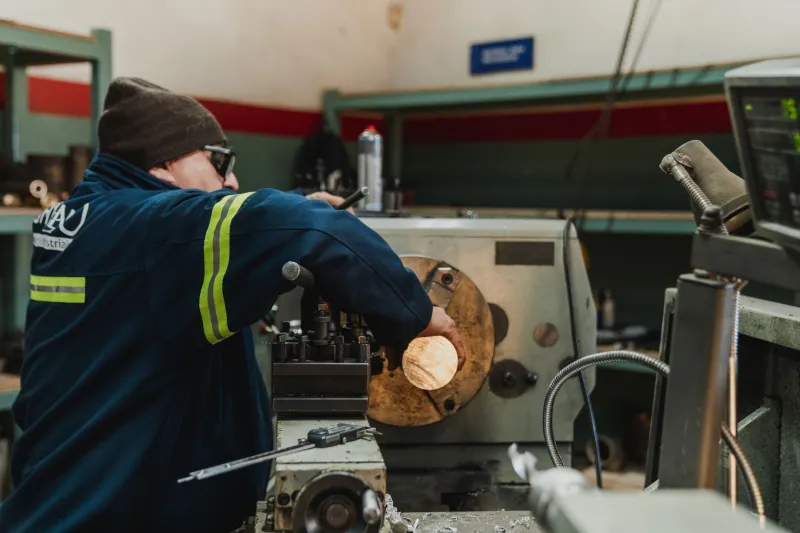
Ask a procurement team in Ohio or Texas why they source precision components from Japan, and the answers come quickly: consistency, tolerances held over decades, the quiet confidence of a supplier who has run the same job for twenty years without a single corrective action. What those answers miss is that the people embodying that consistency are, on average, older than the machines they operate.
Japan's skilled manufacturing workforce is aging faster than almost any in the developed world. Industry surveys and government labor statistics consistently place the average age of experienced machinists and tool-and-die specialists in the late 50s, with a substantial share past conventional retirement age and working on contract or part-time arrangements. This is not a distant demographic abstraction. It is a retirement schedule, and much of it lands before the end of this decade.
The Knowledge That Doesn't Fit in a Work Instruction
Every US buyer knows what a process sheet looks like. Fewer appreciate what never makes it onto one: the sound a spindle makes two degrees before chatter ruins a finish, the way a forty-year-old machine's ways wear unevenly and how a veteran compensates in the fixturing, the instinct for when a material lot runs "funny" and needs a slower feed before anyone has measured anything.
This tacit knowledge is the invisible half of Japanese precision. The tolerances on your drawing are only as good as the hands interpreting them. When those hands retire, the drawing stays the same — but the output may not.
The risk is asymmetrical, too. Large tier-one suppliers in Aichi or Shizuoka have institutional depth: training academies, documentation programs, benches of young engineers rotating through the shop. The mid-sized workshops that so often deliver the best value to American buyers — the fifty-person operations we've praised in these pages — are precisely the firms where expertise lives in a handful of individuals. Lose two or three of them in the same year, and the shop's capability quietly resets.
What Effective Succession Actually Looks Like
The good news is that Japan's best workshops saw this coming years ago, and the gap between those who planned and those who didn't is already visible. Buyers who know what to look for can read it like a health check.
Effective succession programs tend to share several markers:
- Structured mentorship, not osmosis. Young machinists are formally paired with veterans, with documented handover of setups, tooling logic, and customer-specific know-how — not just told to "watch and learn."
- Investment in measurement and data. Shops converting tribal knowledge into CMM programs, process capability studies, and digitized setup sheets are building capability that survives any individual's departure.
- Willingness to raise prices for training. A supplier who quotes honestly about the cost of developing a second operator on your part is a supplier planning to still be making it in ten years. Suspiciously flat labor pricing can signal that no one is being trained.
- Retention of retirees as instructors. Many of the strongest workshops now keep their best technicians on past retirement in teaching roles — a deliberate architecture for knowledge transfer.
Five Questions to Ask on Your Next Supplier Visit
Whether your audit is in person or conducted over a screen, these questions cut to the heart of demographic risk:
- What is the average age of your production staff, and what percentage of critical processes have at least two qualified operators?
- How many machinists have you hired in the past three years, and what does their training curriculum look like month by month?
- Which of our parts currently depend on a single individual's expertise?
- What happens to process documentation when a senior technician retires — is there a formal handover protocol?
- Are any retired staff retained in advisory or instructional roles?
A supplier who answers these readily, with specifics, is telling you they've done the arithmetic on their own future. Evasion or vague reassurance is itself a data point.
Pricing the Risk In
None of this argues for abandoning Japanese sourcing. If anything, the demographic squeeze will concentrate the market: workshops that invested in succession will become more valuable, while those that didn't will either be acquired, hollowed out, or quietly absorbed. The buyers who come out ahead are the ones who treat supplier longevity as a qualification criterion today, not a recovery project in 2032.
There is a parallel here that American manufacturers should recognize. The US machining trade has its own silver tsunami — a skills gap that trade publications have warned about for a decade. American buyers understand viscerally what happens when a generation of toolmakers leaves without replacements. Japan's version of the problem deserves the same urgency applied across the Pacific.
The precision you're buying is, ultimately, stored in people. Machines can be replaced in months. Craft takes a generation. Ask your suppliers, plainly, who will be holding the micrometer in 2035 — and listen carefully to the answer.