The Weekend Shift Nobody Scheduled: Inside a Japanese Workshop's 72-Hour Prototype Rescue
The email arrived at 4:47 PM on a Friday — Osaka time. For an American procurement manager at a Boston-area medical device company, that timing usually means one thing: your problem just became next week's problem. A critical prototype for an FDA submission had failed dimensional testing, the domestic shop quoted two weeks, and the only alternate supplier with the right five-axis capability sat half a world away, about to close for the weekend.
By Monday morning, the replacement part was on a courier truck. The story of how it got there — and why it could — says more about Japanese manufacturing responsiveness than any capability brochure ever will.
The Stereotype Versus the Inbox
The persistent image of Japanese suppliers is one of deliberation: months of quotation cycles, layers of approval, a culture that treats speed as the enemy of quality. There is truth in that reputation, but it describes the wrong context. Japanese workshops are deliberate when deliberation is cheap and risk is high — first articles, long production runs, new relationships. They are remarkably fast when the constraint is clear and the cost of delay is shared.
The Friday-afternoon email landed in the inbox of a mid-sized machining firm in Higashiosaka, a city dense with small factories that supply everything from camera shutters to rocket components. The company, like many of its peers, runs with fewer than sixty employees. That size is not a liability here. It is the entire mechanism.
Saturday Morning: No Escalation Required
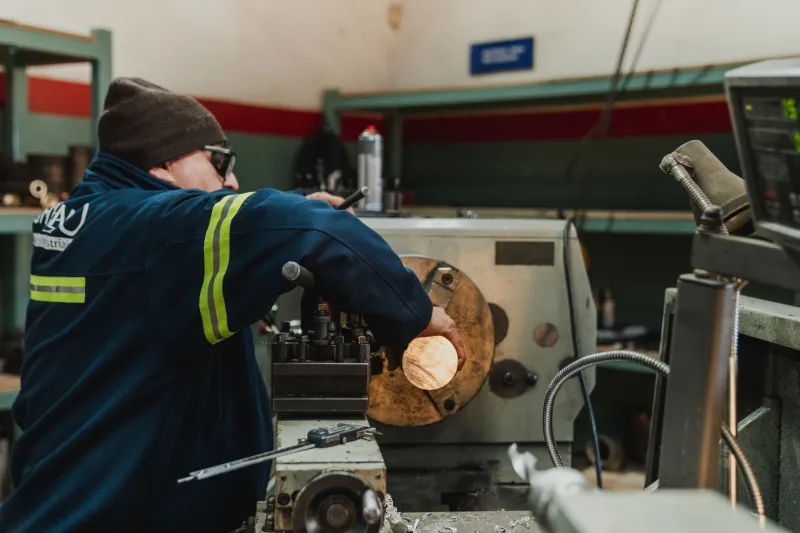
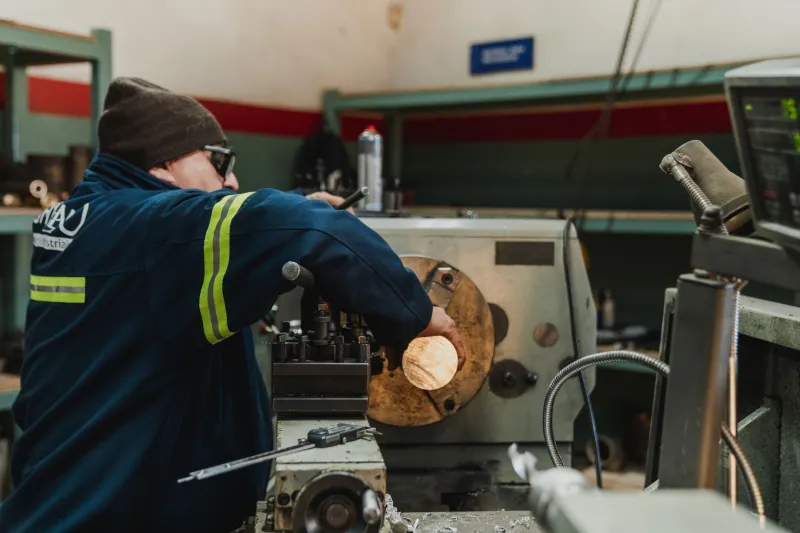
In a large organization, an urgent weekend request triggers a process: someone flags it, a manager approves it, a planning department reshuffles the schedule, and each step waits for the next business day. In the Higashiosaka workshop, the engineer who received the email simply walked to the far end of the floor, where the senior machinist was finishing a setup, and asked a question.
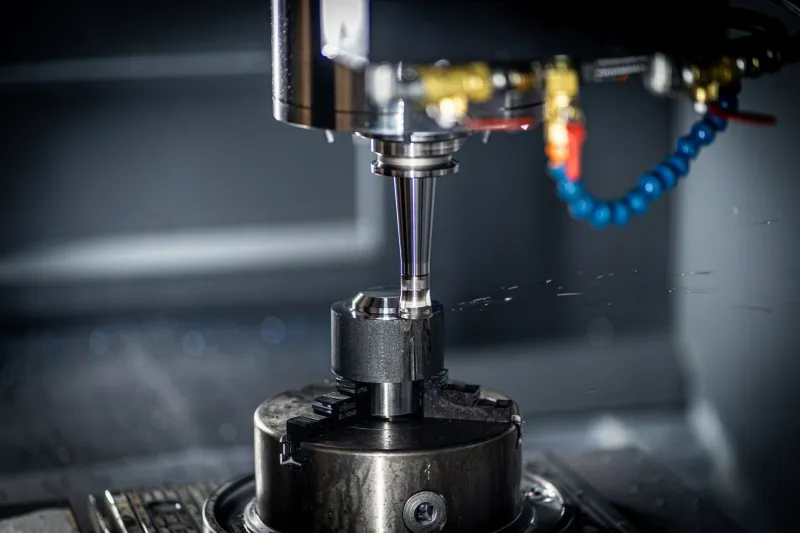
That machinist — cross-trained on the shop's Mazak five-axis mills, its wire EDM, and its inspection equipment — had run similar geometries the previous quarter. By Saturday at 9 AM, he was at the office, not because anyone ordered him there, but because in shops like this one, the person who reads the email often owns the outcome. Ownership is not a corporate value printed on a wall; it is the absence of a handoff.
The weekend plan formed in three conversations, not three meetings. One: the fixture from the original prototype run could be reused with minor rework, saving a full day of setup. Two: the material specification matched stock already on the shelf. Three: the shop's inspection room could run first-principles dimensional reports Sunday evening, with the quality lead reviewing remotely from home.
What 'Flexibility' Actually Means on a Factory Floor
American buyers often hear 'flexible scheduling' and picture overtime. What happened in Osaka was subtler. The workshop's Monday production schedule existed to serve its committed customers, and it was not disrupted. Instead, the urgent job moved through gaps in the schedule — the hours when a machine would otherwise sit between jobs, and the window when a cross-trained operator could run inspection without pulling anyone from a production cell.
This is the quiet advantage of Japan's mid-sized workshops: a workforce where the milling hand can also run the CMM, where the quality lead can read a CAD file at his kitchen table, and where nobody needs a change order to change a plan. Bureaucracy scales with headcount. So does speed, in reverse.
Monday, 10:14 AM
The part passed first-article inspection at 6:40 AM local time, was photographed alongside the dimensional report, and was packed with a one-page summary of what had changed from the failed prototype — not just the fix, but the suspected root cause of the original deviation. The courier pickup was scheduled before the US buyer woke up.
When the Boston team opened their laptops Monday morning, the response was waiting: photos, inspection data, a shipping tracking number, and a plain question — whether the customer wanted the part sent by air or whether they'd prefer the shop to hold it and refine one surface finish detail further. Even in a rescue, the supplier was thinking about the next step, not just the current one.
The Lesson for Sourcing Teams
None of this speed came from cutting corners. The inspection was thorough, the documentation complete, the root-cause analysis genuine. What compressed the timeline was structural: short internal distances, cross-trained people, and a culture where the person who can solve the problem is the person who reads the email.
For US sourcing professionals, the takeaway is practical. When evaluating a Japanese supplier, don't ask whether they can move fast — ask who, by name, would handle an urgent request, and whether that person can inspect what they machine. The answer reveals more about real responsiveness than any stated lead time ever will.
The stereotype of the slow Japanese supplier isn't wrong so much as incomplete. Deliberate where it counts, decisive where it matters — the best workshops in Higashiosaka, Nagano, and beyond have simply decided that a Friday afternoon email is not the end of a week. Sometimes, it's the beginning of a weekend that saves a program.