The Hands Behind the Hours: Meet the Technicians Who Keep Forty-Year-Old Machines Running Like New
There is a particular kind of photograph that circulates in Japanese manufacturing circles: a machine tool, installed in the 1980s, its paint faded, its ways still holding tolerance to within microns. To a visitor from a culture that replaces equipment on a five-year depreciation schedule, the image looks like a museum piece. To the technicians who maintain it, it's simply Tuesday.
The American instinct when evaluating a supplier is to tour the floor and count new machines. It's an understandable heuristic, but it measures the wrong thing. What separates a reliable supplier from an unreliable one is rarely the age of the equipment. It's whether anyone is accountable for keeping that equipment in a state where it can hold a tolerance tomorrow, next month, and ten years from now.
The Machines That Never Make Headlines
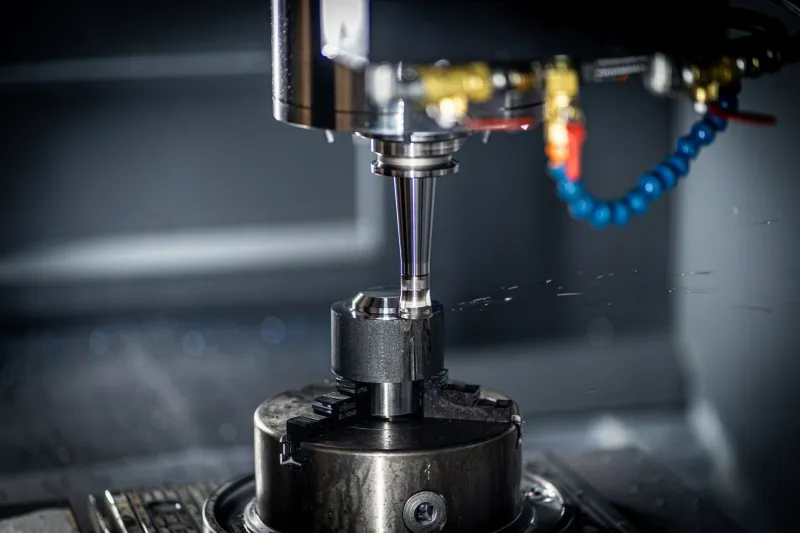
Consider the equipment your product touches without your knowledge. Precision grinders — the machines that produce the shafts, bearings, and sealing surfaces inside everything from medical devices to automotive fuel systems — operate at tolerances measured in fractions of a micron. A grinding machine out of true doesn't fail loudly. It quietly produces parts that pass incoming inspection and fail in the field eighteen months later.
Wire EDM machines, which cut hardened steel with electrical discharge, are similarly unforgiving. Their accuracy depends on wire tension, dielectric fluid condition, and thermal stability — variables that degrade invisibly without disciplined maintenance. And coordinate measuring machines, the arbiters of every quality dispute, are themselves precision instruments whose calibration drifts with temperature, vibration, and time.
A CMM that reads two microns off doesn't just misjudge parts. It misjudges every part, every day, in a direction nobody notices until a customer complaint arrives. The entire quality system rests on equipment most factory tours never linger on.
Maintenance as a Career, Not a Cost Center
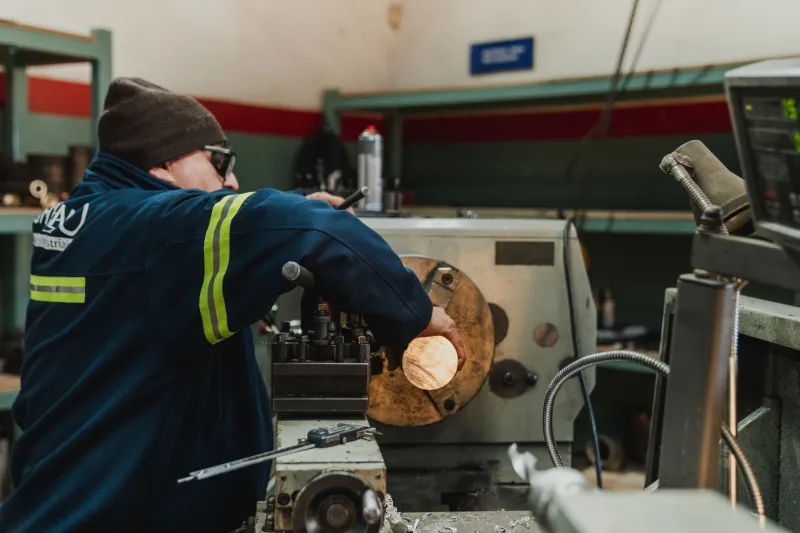
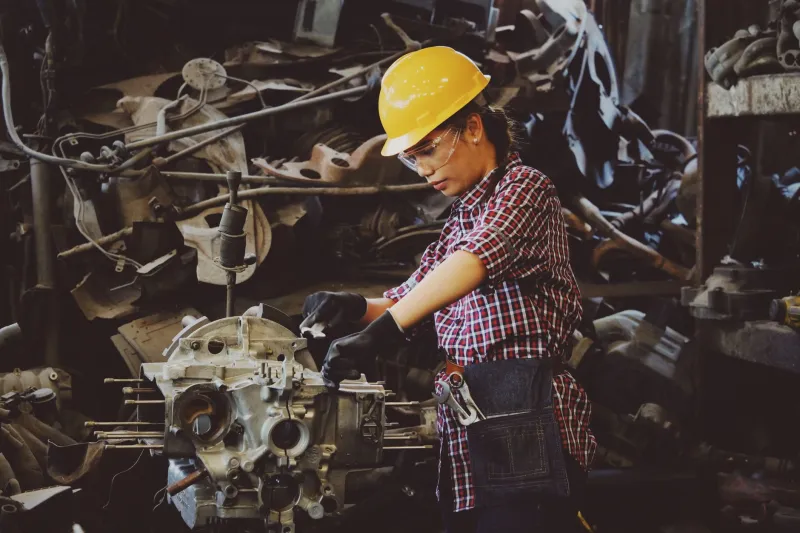
What makes Japanese workshops different is not that they own better maintenance manuals. It's that maintenance is a career path with status attached. In many mid-sized Japanese shops, the most senior machine technicians are the ones responsible for preventive upkeep — spindle rebuilds, way scraping, geometry verification — and their judgment is consulted before, not after, problems arise.
Way scraping deserves particular mention. It is a hand skill, taught through years of apprenticeship, in which a craftsman removes microscopic high spots from machine guideways using a scraper and a reference surface, checking progress with blue dye. Machines scraped by a skilled hand can hold accuracy for decades. It is slow, analog work with no automation substitute — and it is increasingly rare outside Japan.
The economic logic is straightforward. A rebuilt spindle costs a fraction of a new machine. A machine whose geometry is verified quarterly produces scrap at a rate a new machine with no maintenance program cannot match. Uptime is not an accident of good luck; it is the compound interest of small, unglamorous interventions performed on schedule.
What This Means for Your Supplier Selection
When you audit a potential supplier, spend your time differently. Ask to see the maintenance logs — not the calibration certificates, the logs. Ask how old the maintenance technicians are and who is being trained to replace them. Ask when the primary grinder's geometry was last verified and what the results were.
A supplier with a strong answer to these questions and a fifteen-year-old machine will outperform, over any meaningful horizon, a supplier with a brand-new machine and no answers at all. The machine is a snapshot. The maintenance culture is a trajectory.
Great manufacturing, in the end, is less a machining culture than a maintenance culture. The machines your product depends on will spend far more hours being kept ready than actually cutting. Choose the supplier who understands that the keeping-ready is the job.